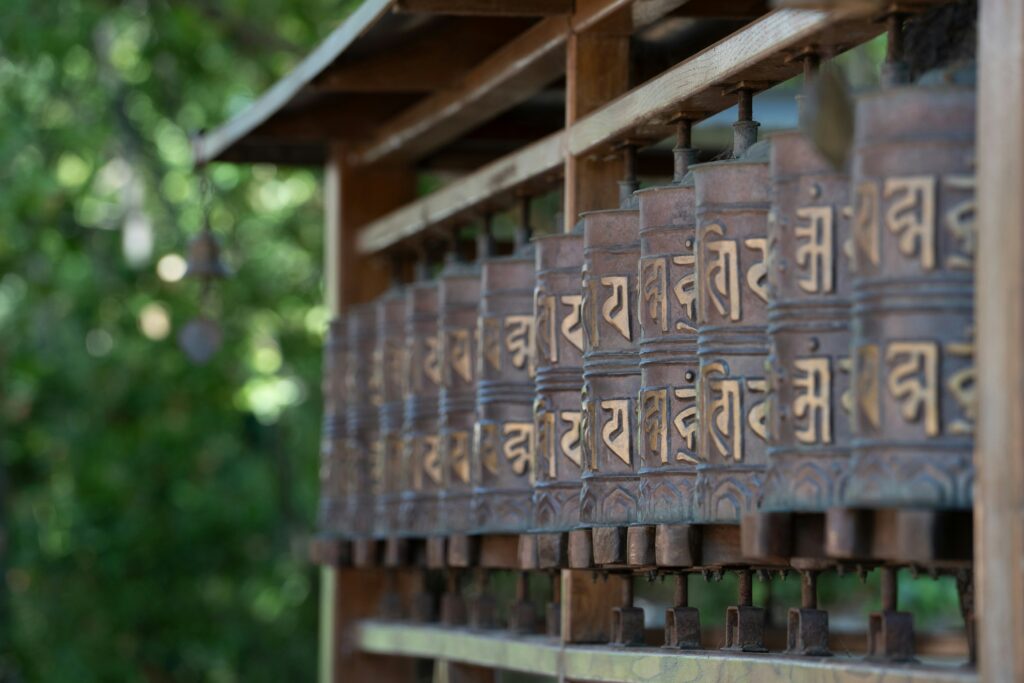
Feeling the pain of a world in conflict

Photo by Mike Setchell on Unsplash

I’ve been feeling low rather regularly in the last week. It’s really been at odds with what’s happening in my life. Broadly speaking, I’m actually on the up.

Yet as I regain my connection with the world, I also regain my connection with its pains. And right now, the world is in a lot of pain.

Seeing what is happening right now in Gaza is devastating. My soul has been longing for some space for sadness. After a period of time, perhaps I’m finally giving it.

I’ve lived in a political world for most of my adult life. I’ve gotten used to being up close to the messy realities of life. That’s meant a mixture of needing to build a thicker skin, and to some extent desensitising myself to what is happening. This was necessary, otherwise I simply wouldn’t function. But it also means that I can get overly protective of ourselves for fear of feeling the pain so deeply.

My career has been injected with messy politics. I was a European Commission trainee when the UK voted to leave the EU. My first few years on the career ladder was working on Brexit within the UK Government. The next few years we’ve witnessed Black Lives Matter, COVID, the war in Ukraine, and now Gaza. I know there’s more that doesn’t get the attention either: Congo, Sudan, Yemen and others. Then of course there’s US politics, but that would require its own political essay.

There was also the changing regime in Bangladesh. Student protests turned into greater civil unrest. This eventually led to the unseating of the long term Prime Minister, Sheikh Hasina.

I was very anxious last year as to whether the situation would deteriorate into a military style dictatorship. For now, things have stabilised, but we will have to see how the elections go next year. I felt a fool for not knowing how authoritarian things had gotten under the last government. Political opponents were sent into a jailed ‘House of Mirrors’. People would simply disappear to be tortured and starved. The state would deny any knowledge of them.

I’ve also felt betrayed by British politics. A shift from a supposed left-wing government to one against workers, migrants and trans people leaves me feeling disgusted. Not only is it a failure of following ones own principles, it’s also politically dumb. People who vote Reform are not going to suddenly shift to Labour. Meanwhile, previous core voters like me are wondering whether I will ever vote for the party again, let alone at the next election.

This is probably the first time I’ve acknowledged how much political anger I have, and how much this has been weighing down in my body. I’ve had a pain in my throat for a good number of months. It’s a sign that I’ve not been able to truly express myself.

I believe that there will be big social change coming. It may not happen right away, but the increasing amount of societal friction will inevitably lead to a big change.

But in the meantime, it’s important that we take care of ourselves. For some of us that will mean becoming more vocal – going out and protesting and being more active. And for some of us, that will mean withdrawing, reflecting and observing.

I’m certainly more in the secondary category. The idea of attending protests honestly frightens me. Not because of violence, but because of the amount of overwhelming emotional energy. I’ve had to learn to accept that I’m a more sensitive soul, and my skills to make change are better placed elsewhere.

I do wish that this was valued more. There is an implicit expectation, particularly in activist spaces, that supporting causes means needing to be at public demonstrations. If you don’t turn up, it’s because you don’t care. Yet real societal change has required some of us to do the quieter, less vocal and visible work to really implement things.

Alas, I’ve also learnt is not to get too caught up in these details either. The Universal Law of Nature demonstrates that there is a higher working to this all. We do not need to fix the world’s problems on our own. At the same time, at an individual level we still can do good things. And good actions will lead to good outcomes for us and the world.

Truly letting go to something higher means accessing a deeper belief that we will reach a happier, more united society in the end. Many key activists who fought for equality never even saw these things realised in their lifetime. But that did not deter them from action.

So even in times of strife, we can live feeling happy and hopeful. We can both be connected to the pain in the world but still choose peace and contentment.

In many ways, this is the greatest form of protest.

Riding the emotional downs without guilt

Photo by Alexas_Fotos on Unsplash

For the last few weeks, I’ve been waking up feeling pretty ‘ugh’.

The film Inside Out 2 introduced a new character to personify this. The character was called ‘ennui’, with a stereotypical French manner of ‘bof’.

Ennui is essentially a feeling of disinterest and melancholy. It’s a good description of how I’ve been often feeling in the mornings and late in the evenings. (Although I preferred the first film better)

What’s been jarring about this is how much I’ve actually been doing recently that has felt positive. I’ve been feeling healthier. I’ve had some job interviews and progressing with my other projects.

Yet despite this, I often wake up with little energy to start the day. It’s hard to logically explain, because a few hours later, I can feel completely different. I get going with my life. Things feel in flow, and I’m enjoying my existence.

If I spend too much time thinking about it, I can end up getting super frustrated. After all, how can we have so many emotional shifts within the space of a single day?

When I’m back to feeling good, I end up forgetting about the harder moments. This is generally a good thing. After all, there’s little benefit in lingering on unpleasant emotions when they’re in the past.

But I can also be quick to pretend that I’m ‘fixed’ now. I can ignore the general sense of dissatisfaction and fatigue because I’m not feeling it at that time.

This works, until it doesn’t. The tougher moment comes back. I feel low again. But now, I also start feeling guilty. After all, didn’t I just tell people how things are going well in my life?

The more we get frustrated, the more end up spiralling into negativity. We end up asking ourselves rather dramatic questions: What if there’s something wrong with me? What if this is some form of clinical depression? Perhaps I’m broken, and am doomed to feel like this forever more(!)

With a bit of space and perspective, I can see that such thinking isn’t particularly helpful. After all, we can have a very flowing, calm relationship with our emotions. In fact, we all are pretty good with doing so. But we seem to be much better at practicing such a relationship when the emotions are pleasant ones. It’s a lot harder when they feel uncomfortable.

The moment we start feeling bad, we start to analyse ‘why’. Why do I feel bad? What must I do to shift this experience as quickly as possible?

It’s important to give space and time to experience the emotions, whether pleasant or not. I’m feeling life’s shifts. There are changes going on in my life. Some of these are internal to me. My perspectives on life are shifting, and my physical body is evolving. I also exist in symbiosis with the world. The shifting weather is challenging, and let’s not even mention the political climate.

An important part of life is finding ourselves in challenging situations. This truth is no different for me.

So when I feel in a rut, I usually end up returning to the same conclusion. Trying to force myself out of it rarely works. Sugarcoating my emotions with some ice cream is only a temporary fix. In fact, the idea of that doesn’t even appeal to me, because I know that it could end up making me feel worse after the sugar crash (and the guilt of it too)

And so, instead, this is about letting life be. Emotions come and go. But we persist. I’m proud that I can continue with the things I need to do in my life, even if I feel tired or down.

I used to get quite caught up in the idea that I’m meant to ‘figure out’ what’s going on. But I’ve become a lot more relaxed about that. After all, if there’s something big that I’m meant to be seeing, life has a way of showing it anyway.

What the human body teach us about healing

Photo by Yoann Boyer on Unsplash

A few days ago I went to the Osteopath for a pain in my left shoulder.

The pain is nothing new. I’ve had this pain whenever I do a few sessions of yoga. It’s come back ever since I’ve restarted classes a few weeks ago.

The pain itself is not too bad. I can carry on with my life, as long as I ignore it long enough.

And yet, this didn’t seem like the best way to deal with the problem. Perhaps now was probably the time to actually fix it, rather than just constantly managing the situation.

Essentially, my shoulder muscles have gotten bigger than those in the rotator cuff. If I do certain movements such as a plank or downward dog, this causes an unpleasant compression, which pinches the nerves.

I injured myself when I was 16. Like any adolescent in the gym, I didn’t really know what I was doing. I did some behind-the-head lateral pulldowns and at one point felt a tear in my left shoulder. I’ve since learnt that movement is apparently not recommended because it can cause shoulder injuries. Well here I am 15 years later with that exact issue!

This isn’t the first time I’ve looked into the problem either. I actually was getting it looked at before by another osteopath in London. But then COVID struck, and I stopped going. That was five years ago. The problem didn’t magically disappear.

And so, my new osteopath has just given me exercises. This will strengthen that area and hopefully I stop getting my nerves pinched. If it works, I’m hopeful that I can actually sort out this issue.

What was really interesting about the session with the osteopath was learning how much tension I have – both in the area and in my body in general. I can’t say I’m particularly surprised that I’m tense. Having a year of burnout in the midst of political crisis does that to a human. But what is interesting is how that has a direct effect on my body, and more specifically on my muscular system.

The osteopath asked me to ‘let go’ of my left shoulder. I found it very hard to do so. The concept of letting go control just felt alien. To the point where I didn’t even know what she meant.

So apparently, I spend most of the time tensing my left shoulder. I haven’t even noticed I’ve been doing it. It’s funny, because now that I see it, it’s really obvious. I can directly compare it to my right shoulder, where the muscles are working in ease.

This point around letting go was fascinating for me. It’s quite a different way of looking at it than trying to fix the problem.

For example, whenever I feel pain in the area, there’s a few stretches that I do. But I realise that I’m actually overcompensating with these too. It’s as if I’m stretching everything to somehow pull the body back into it’s place. But the aim rather should be to relax the muscles back into their own groove.

When muscles are working well, we feel pretty relaxed. These intricate, incredible internal systems work like clockwork. We have little idea that they even exist, let alone how they properly work together.

But when something goes wrong, it’s only then that we start to analyse the problem. We poke and prod, looking for a way to fix it. If we get frustrated, we start poking harder. But constantly poking can actually just make the problem worse. It’s like an itch that we keep on scratching until we start to bleed.

True remediation is guiding things back to their natural flow. We focus less on the pain, and more on fixing the actual problem so that we can return back to our base state.

This is as true for a physical injury as it is an emotional one. True healing is when the problem no longer arises. A trauma – whether physical or emotional – is no longer felt. It has vanished into the black hole of the past. It no longer becomes a reference point of how we need to act.

But true healing requires more dedicated, deeper work than sticking a plaster over the problem (In my case, I’ve literally been putting tiger balm on my shoulder).

It’s taken me 15 years to finally deal with the issue of my shoulder.

How long will it take you to deal with yours?

Why we need to stop ‘grinding’ for success

Photo by THLT LCX on Unsplash

Competitive culture is getting us obsessed with grinding. The answer to any setback in life just seems to be to try harder. But grinding is not healthy. And often, it’s actually very counterproductive.

It is true that many valuable things require hard work. Healthy relationships, successful careers and good fitness take work. But hard work is different to grinding.

This is something I’ve had to learn the hard way.

Hard work is when we dedicate ourselves to a task. We continue with it, even when the going gets tough. We understand that life ebbs and flows. Appreciating the good moments means also facing the tougher ones.

Grind culture is an over-focus on trying harder. Whenever there is a setback, the answer is just simply to go even more intensely. Push further. Sacrifice more. The problem with this is that it leaves little space for people to consider whether the goal is actually the right one.

One of the big spiritual shifts I’ve had over the last few months is realising that if something is feeling overly difficult, it’s probably not the right path. Life isn’t meant to always feel like a constantly evolving rubik’s cube. Sometimes we have to realise that things aren’t working. If we just keep on pushing, we’ll end up wasting even more time and energy.

I’ve seen the success of a rethink. I’m as strong and healthy as I’ve ever been. But that was because I realised I needed to change. I had been switching through different exercise activities – yoga, dance classes, squash – but found myself not progressing. I would either get injured, or subsequently fear getting injured again. These activities were simply too intense for me.

I thought that if I simply perservered, things would be better. Indeed, even my teachers spoke to me about the importance of being consistent and pushing through the initial discomforts.

Yet after a few years of on-and-off exercise, I had made very little progress. It was confusing, and also discouraging. I would see people who had started well after me progress passed me. Again, I got told that everyone is on their own path. And whilst this was true, with the benefit of hindsight I can now see that the path I was on was leading me nowhere.

And so, I decided to try a different tact. I signed up for a gym, and started working with a personal trainer. Rather than focussing on cardio, I worked on building my strength. It took a few months to adjust to it. But eventually, it started to click. I saw my growing strength, and improving rates of recovery.

In the last week or so, I’ve since returned to some yoga and dance classes. I wasn’t suddenly amazing, but they felt easier. I also felt much better after doing them, which was in stark contrast to before where I felt like I had been hit by a bus.

Sometimes we need to reassess. But we cannot do this if we’re in a grind mindset.

Which brings me to where I’m seeing this same point in other parts of my life. Making a viable business is tough. I knew the odds were pretty low when I started. But I’ve applied myself diligently. I improved my skills, taken courses, experimented with different avenues.

But ultimately, I am nowhere near making it work. And if I’m honest, I see no real route to success either, barring a miracle.

I’ve been working with my dad on writing his biography. I’ve learnt a lot about entrepreneurship. My father was a serial entrepreneur. He opened many restaurants in the 80s and 90s, at one point co-owning around 11 different establishments.

The difference in conditions were stark. Back then, the idea of running a physical shop was feasible. Buying property was also a realistic thing for people too. It felt far more aligned to seeing a realistic proposition of success. When I compare it with where I’m at today, it feels a bit hit-and-hope.

Now I’m not saying it was easy for my father. He had to deal with outright racism, adapting to a new country and culture, as well as far less access to information than we have today.

Yet, I also see that he had a much better set of conditions to succeed in entrepreneurship. Whereas when I get really honest with myself, I realise how much I’m playing a very low percentage game.

Coaching is an extremely saturated market. There are so many out there. Standing out is challenging. 80% of coaches fail within their first year.

I also took the decision to move to Brussels. Whilst this has been great for me personally, from a business perspective I have distanced myself from many personal and family connections. I also feel like it is a town that is less open to this sort of work than if I were to have stayed in London.

Whilst it is a cosmopolitan city, the expat space here can be pretty elitist, and the work culture more old school. If someone wants business support, they’re far more likely to go to the older white guy in a suit. If they want emotional support, they’re far more likely to go to the kind-looking white woman. Although I do believe that what I offer is different, (and to be honest far more valuable), I’m also seeing that, right now, it might be too ‘out there’ for the people around me. The search for a more spiritual perspective is far less visible in Brussels than it is in London.

I am comparatively a lot younger than most people who have managed to build such a practice. I have built connections, but they tend to be more around my age, and so also at a more junior level. Whilst every connection is great, there is a reality to knowing people higher up that can open doors for you.

I also chose a country which is very tax-unfriendly for freelancers and independent workers. To feasibly make above what I could earn in a minimum wage job, I would have to bill around 50,000 euros in a year.

None of these things are insurmountable. But put together, it becomes quite clear about how the path I’m choosing is very hard. For the last few years the answer has been to just simply get better, and learn more. But like with my exercise, it’s probably better to put it on pause.

I’m grateful that I’ve done the work myself, so I definitely don’t see this as a failure. I know there’ll be a time where I’ll get back to doing this sort of work. And I can foresee that in a few years the tide will shift. More people will be looking for deeper work. The connections around me will also have done more of the ‘tried-and-tested’ methods, only to find that they give half the answer. I’ll also be deeper, wiser, and more knowledgeable.

I could see none of this previously because I was so immersed in ‘the grind’. Digging deeper and deeper doesn’t actually make things happen, as can be demonstrated from my experience. I’ve persevered with what I wanted to do, but I am now falling into ‘fool’s errand’ territory.

And so I invite you to look at your own life. Where are you simply grinding away without reflection?

Taking time to reassess whether you’re on the right track could get you to your destination quicker. And if nothing else, it could save you years of pain and struggle.

What’s the point of protesting anyway?

Photo by Duncan Shaffer on Unsplash

For a long time in my life, I found protests pointless. I didn’t really get the point of going out on the street to complain about things. It didn’t really seem to do a whole lot.

But my view has shifted over the last few years. I’ve experienced more political events that have struck me personally. Sometimes protests are simply needed to release a built up level of frustration. Other times, it is important to demonstrate that we are not quietly accepting something that is being imposed upon us.

I’ve built a growing admiration for those who lead protests. It’s not a simple thing to galvanise people into action. Whilst I may not be a personal fan of the oft harsher messaging, I’ve also come to appreciate that my preference for technocratic change is ineffective if it is not paired with radical action to shift societal opinion.

Despite this, I find many protests are not particularly effective. In fact, sometimes they may actually do more harm than good.

Where I see many protests fail is how they end up actually putting off people that could potentially support the cause. For example, I tread activist spaces with a great level of caution: put simply, these spaces can become sycophantic. Your value as a person is directly correlated to how much you agree with the leader. If you are not fully in alignment with the beliefs of the group, you are not One Of Us.

As someone who rarely fits into cliques, it makes things pretty challenging. I’ve become increasingly critical of the climate movement that I see, particularly around me in Brussels. The activist spaces are often dominated by white cis women. Despite preaching tolerance, I experience more racism in these spaces than I do in others. I’ve now realised I’m not actually welcome in these spaces, so I’ve stopped engaging.

Every now and then, I’ll hear about how they want to attract more men and racialised minorities to these groups. But I’ve come to realise that I also can’t help these people. What is actually required is too dramatic a shift in the way things are done. I’ve actually experienced people lashing out at me because they did not like what I said.

I recently saw a post on LinkedIn from a woman, who was wondering why many men do not engage with issues around women’s rights. I replied explaining that it’s such a minefield where men are often worried that they’ll get told off, that they find that they are better off not engaging. I had a lot of men agree with this comment, as well as the woman who was the original poster. But I also had a woman reply to me complaining about my perspective, with an angry tone, something along the lines of ‘goodness grief, men need to pull their finger out’.

Is her response justified? Sure, it can be frustrating to see a lack of reaction. But does it help the cause? Totally not. I literally responded to a question from a woman around why men do not engage on posts. I then got told off for my opinion. Next time, perhaps I shouldn’t bother engaging.

But more practically, I feel that protests often become the go-to response to every situation, simply because people do not want to reflect on their own behaviours, or do some proper planning to agree upon a strategy. When you dig under the surface, activist spaces oft turn out to be filled with the same ego-driven and cliquey behaviour that are supposedly being fought against.

I’ve been reading Moral Ambition by Rutger Bregman. The idea behind the book is to focus on tackling the world’s biggest problems, focusing more on societal benefit rather than personal gain.

We’ve heard the story about Rosa Parks and how she refused to get up from her seat for a white passenger. What we know less about was how the whole movement had been orchestrated for years. Hard work of activism and planning meant that when this happened, there was a concerted effort to make people aware what was going on. 35000 leaflets were distributed in super-quick time. 20 women from the Women’s Political Council went out to advocate the cause. The continuous advocacy meant that Male church leaders (including Martin Luther King Jr) ended up supporting the cause, despite initially being reluctant to get involved.

This worked because people were aligned to the mission. There was broader agreement on what needed to happen, and there was commitment towards it. There was also more of the key organisational work done by people like Jo Ann Robinson. A person who did not do tihs because they felt they needed their names in the history books, but instead were more focussed upon making a real world impact.

Social movements fail because they lack the level of structure and planning to create an effective movement. There is a lack of common vision of what people really want to see happen, and too much cliquey behaviour which ends up putting people off.

Change these things, and you’ll make an impact.

How to stop feeling tired all the time

Photo by Ephraim Mayrena on Unsplash

Work. Eat. Sleep. Repeat. When did life become such a grind?

The amount of people who are constantly tired and overwhelmed is staggering. And it feels like it’s only getting worse. We seemingly cannot manage the amount of things that are pulling us left, right and centre.

The paradox here is that we have more modern day conveniences than ever. Washing machines for our clothes. Takeaway apps for our dinner. ChatGPT for our work reports.

A lot of us also work less hours than our parents or grandparents did too. So why is it then that we so many of us end up using our evenings and weekends to simply crash into our beds?

I remember my early days working in the UK Civil Service. It was a chaotic time – the UK’s withdrawal of the European Union was underway. Uncertainty and fear was the backdrop of the atmosphere.

The logical answer would be that my tiredness stemmed from the amount of work this super complex task required. But that wasn’t really true. In fact, the thing that drained me the most were the day-to-day frustrations I had. I used to go home and spend hours being annoyed with my managers, not understanding their decision making or behaviour. I would try and analyse what was happening, and how I could do better. Again, logically this sounds like a good thing to do. But in practice, I would lie in bed, often for hours, trying to find the solution for the particular predicament of that day.

It probably won’t surprise you to hear that I failed. My constant thought loops only made me more tired, frustrated and upset. I then didn’t have energy to eat – instead ordering takeaways, eaten whilst watching mind-numbing TV. By the time I needed to interact with this person again, I had no energy and ended up wanting to avoid them. This is a pattern that most of us fall in. We get so used to using our analytical brain for everything that we end up using it in futile, self-destructive ways.

What I needed to learn is to balance my brain with my body and intuitive spirit. By being so head-heavy, I failed to have a proper balance with life. I could not let my work go, and just get on with life.

So here’s the real secret about feeling tired. It’s often not about doing too much. Instead, it’s about thinking too much. It is our constant thinking that leaves us feeling exhausted. Our bodies may be restless, but our brains are fried.

It’s why doing manual tasks can be a lot easier than doing mental ones. We can turn the brain off and just get going. We can often enter a sports class feeling drained, only to feeling energised by the end of it.

The real key to stop feeling tired is to attain a level of mastery of the mind. We must learn to let go of the worries, troubles and fears that we carry around. After all, The things that bother us are rarely about the specific action, but instead what we make them mean about us. It’s not what our manager said about us that makes us feel upset, but the fact that we interpret it as disrespectful, which eats away at our self-worth.

The way to feel more energised is to work on ourselves. We need to rebalance the way that we function in life – leaving time for the soul to take the lead, rather than the brain. We also need to heal the mental scars within us.

I’m hosting a conversation around how to do this on Monday, 7pm CEST / 6pm UK time. Further information can be found here. If you’d like to attend, please do register via the Zoom link at the top.

This conversation is for you if you are in a loop of feeling tired, but do not know how to make changes to break that cycle. It will be an interactive discussion, so the more you come with something specific, the more you will get out of it.

I am also working with individuals 1-1 around these topics. In conversation, we can look at the particular things that you are finding challenging. Working on these challenges, and ultimately healing them, will be what sets you free.

It’s time for you to change the world

The stage is set. The audience is waiting. It’s time for you to step up.

No person was simply destined for greatness. It is honed, cultivated and created.

‘But who am I to make a change?’

You have a deeper reservoir of power than you ever even realised. This I know, I see it time and again in people.

Greatness is there for you, if you’re willing to work for it.

But greatness is not about wanting fame, fortune and riches. It is about relentlessly changing the world for the better. Greatness is the deeper conviction. The drive. The energy.

Ever hung around someone with such a powerful aura that their energy was so intoxicating?

When I went to India a few years back, I briefly came face to face with a man named Steve Hardison. He was the sort of guy you would have to pay $200,000 dollars to work with. And the sort of person that you would fly all the way to India to hear him speak. From the outside, It sounds like some sort of slick marketing schtick to shock people. That is until you meet him.

I remember being at a reception before the event. He took the time to greet people, one by one. He looked deep into people’s eyes. Into your soul.

He came and greeted me. What he did was both unremarkable and incredibly. He uttered but a few words, but the wave of energy I felt from this man was incredible. It was beyond anything I thought was actually possible. But there it was. I felt it

I was actually just chatting with someone else I knew. Steve greeted both of us one by one, then moved on.

The other person turned to me straight afterwards.

‘Did you feel that?’

I did. He did too. We all did.

But perhaps this man was privileged enough to get this far in life.The book, The Ultimate Coach, is about his life. No, this was a man with a difficult upbringing. Poverty. Single mother. Marital problems. It was possible for him. It’s possible for anyone.

The greatness comes from the work we do upon ourselves. When we can stare eye to eye with the deepest darkest parts of our souls, that is how we transcend.

It is when we have done this work that we are ready to truly change the world. The great people of history attained this level of transcension. You can too.

But such grandiose ideas seem far-fetched, right?

I get it, particularly when you may be feeling tired, stuck and overwhelmed right now.

But these are life’s challenges. The way we respond to these challenges are what make us grow. Each moment is a chance to either hone ourselves for something greater, or to retreat into comfortable misery.

I’m seeing a lot of positive momentum flow into my life right now. Along with a sense of quiet content, I’m seeing the world respond too. I’m seeing ever-improving gym results and seeing fun opportunities to do new projects. I’m currently two sessions into interviewing my dad to write his life’s biography.

This sudden burst of energy is not a coincidence. I had to do a lot of deep work on myself. It took a long time. Some of it was uncomfortable. Some of it was extremely painful.

But when we do this work, life responds and rewards us. This is Dhamma, the Universal Law of Nature. Once you start to see it, you will see it everywhere in your life.

If you want to change the world, let’s speak. I can bring you from where you’re at now to a massively increased impact in the world.

Being in the happy, natural flow of life

Photo by Nicole Linnarz on Unsplash

Since April, I feel like I’m making progress. I’m putting in effort, and I’m seeing results.

This is in stark contrast to the last twelve months. Things have felt a struggle. There was a constant sense of ‘two steps forward, one step back’. I wasn’t in control of my body. My energy levels felt like a daily roll of the dice. I wasn’t clear with where I was going.

Right now, I feel like being in flow with life. Before, I felt like I was a boat paddling against the currents of the river. Now, I feel like I’m paddling with it.

So what changed?

Some things were about simply resting, recuperating, and understanding. I still joke that I thought 2024 would be more quiet. Instead, the norms of my life were completely shifted via burnout, an autism assessment and numerous other things.

This was necessary, and there was no bypassing this step. We cannot shortcut the difficult periods, even when our brain tries to rationalise it. At first, I kept trying to plan my sickness to see if I could come back to work earlier. But logic severely underestimated how deep the malaise was.

By late last year, I started regaining my energy, slowly but surely. And so I started looking ahead – what did I want to do and how could I extract myself from this low point. What followed was a burst of energy, hampered by sudden bouts of fatigue. I still felt lost, as well as the pressure of creating the life I wanted to live. In truth, I wasn’t really ready for greater things, but the process helped me understand more about myself nonetheless.

The change was caused through my deepened trust in the forces of the universe. A 10 day Vipassana silent meditation helped me shift my belief in the universe from an intellectual one, to one I experience and feel.

The universe has its own ways of testing, rewarding and punishing us. These will come up throughout our lives. When we are feeling stuck, frustrated or angry, this is a personal test. We must learn to overcome our challenges, and we can only do this by developing ourselves as individuals.

For me, this was about deeply letting go of control. I do not need to plan and perfect so many meticulous details of my life. After all, life is not meant to be this complicated. One of the reasons I burnt out was because I was managing so many different delicate situations both inside of me and in my work and relationships. This is not sustainable, and the only way I could realise it was through my soul putting the handbrake on.

Having now learnt this lesson, opportunities suddenly seem to be arising again. Fun things to do. Interesting projects. Activities that require effort and diligence, but feel rewarding. Supporting my father with his autobiography, hosting events, running workshops, building deeper connections. I’ve also found a good rhythm for my health. A mixture of fasting and weight training has given me a formula I can follow that gives the results I desire to lose weight.

This is what it is to feel in flow with life. I see the fruits of my labour. I am still tested and have harder days, but I approach the challenges feeling softer, clearer and more assured.

If you want to see real, long-lasting changes in your life, this is the flow you need to create.

Why I do not need to be the arbiter of justice

How many times have you felt wronged by someone? Feeling the anger seeth through you, you feel the need to argue what the other person did was wrong. And if they don’t understand, you think about how they should pay for their actions.

It’s not particularly hard to find injustice within the world right now. Whether looking at the bigger picture of the world, or simply what is happening in our day to day lives.

I’ve felt conflicted for a long time on how we deal with people who are doing bad things. On the one hand, I want to practice the art of forgiveness, demonstrating that I am not holding a grudge. This is particularly the case when the slight is small – forgetting to thank me for something, or being a bit rude in the morning.

But on the other hand, I wonder whether I am being complicit in their actions. Should I not make it known that what they have done is wrong?

At the Vipassanna course I went to, one of the things that stuck most with me was truly learning about Dhamma, or the Universal Law of Nature. When we do good things, good things come to us. But when we do bad things, we receive a negative consequence.

The idea can sound nice in principle, but challenging to accept when we see the inequalities of the world. Yet when we delve deeper, we see that the surface level appearances are different to the reality.

A man can do bad actions and become rich. This is an undeniable fact – we see it all the time in the world. But when we dig deeper, we can see that the man cannot really be happy by being rich that way.

If the man has gotten to riches by lying and stealing, he will forever be looking over his shoulder, worrying whether he might be caught. He will also see his own actions in others, and forever be wary of someone lying and stealing from him. So despite his riches, the man is spiritually poor, and lives unhappily. No wealth and material comforts will change this fact.

Even if someone wrongs us, it is not our duty to deliver them moral castigation. It is not our role to play Universe. If we do, we end up creating misery for ourselves, because we get frustrated, often ruminating over anger.

After all, how many times have you played an argument out in your head? Has this actually ever helped you?

This approach doesn’t mean that we be totally passive. What I enjoy about Eastern philosophy is that it gets away from overly intellectualising every position.

When we have set out that certain actions will have consequences, then it is also our duty to follow through with them. If we do not, then we are complicit with the negative action. We have not acted against a moral wrong. If you’re a shop owner and you catch someone stealing, you stop them. You call the police.

Even a judge can sentence someone to life imprisonment without wishing ill will on the person. This is the judge playing their role in society, based upon the agreed precepts of what people are forbidden to do. But beyond sentencing someone to imprisonment, it’s not the role of the judge to be angry at the person.

Too often we can try to play God, judging people as being bad people. This is not our role, and it only leads us to misery.

The best thing we can do is get out of the way and let the universe do its thing.

This is one of the key foundations to creating happiness in our lives.

On the challenges of creating a community

One thing I’ve noticed recently is how people seem to be crawling out the woodwork. After a long period of post-COVID isolation, I’m noticing more efforts to unite together.

Perhaps this is just my view in Brussels. Perhaps it’s because people are feeling driven to be more active due to the politics. Or perhaps it’s because the weather is getting better.

For my part, I’ve been more actively looking to find a community home for over a year now. Whilst I would love to say it’s been a roaring success, it’s instead been a pretty tough endeavour.

One thing I’ve learnt about creating community is that there needs to be some level of commonality. Without some level of connection, there’s little reason for people to continue investing in that space. Things are created, but no sooner do they end up falling.

One of my first forays into building connection post-burnout was finding people who, on the surface, had similar identities and beliefs as me. I thought that if people looked, sounded, or at the very least had some level of personal identity that was like mine, that it would be a good place to connect.

The hard lesson here was that people with my minority backgrounds can often have pretty negative views of the world. Years of oppression have taken their toll. Such a space therefore becomes a refuge, more about sharing misery with one another. When people bond over shared trauma, it becomes impossible to connect at a deeper level. I realised that such spaces are not healthy for me. The work I have done on myself to be more grateful, happier and positive was treated with suspicion.

I’ve recently realised too that connecting over political causes can also be a risky endeavour. I’ve spent a good number of years working on climate, and so I had a natural gravitation towards these groups. But again, I found that the connection was often based upon a shared anxiety around the world. I’m often at odds with the people around me due to my background, so bringing a different perspective can be seen as threatening. For example, looking to be happy and enjoy life is an unpopular take.

And so, I’ve now looked to focus my energy in spaces where I feel more welcomed. Where identity and politics matter less, and the priority is on genuine connection. Toastmasters has been great for this. The connection is around improving public speaking, and I feel it is so much easier to connect with other people who are also in an open, learning mindset.

I’m on a coaching year long programme, and I once asked a guest speaker around creating community. He replied that the best way to see this is to create the community that you most need yourself.

And so, I felt prompted to do a few things. I first created a social in Brussels, entitled Lifting Spirits hosted at the Full Circle. The aim is to build a community which reinjects a much-needed sense of inclusion and positivity in the Brussels landscape. The first one got good feedback, and we’ll host another one at the end of April (details here). If you’re free and in Brussels, it would be great to have you.

I also decided to create a separate space to connect around this need for greater positivity. And so, I created a Mighty Networks group specifically for this. The aim of the group is to support one another much better than we can necessarily do on the traditional social media platforms.

Might Networks is a separate, closed social media which allows for greater control of what one puts out there and creates (without ads and dodgy algorithms). I realise that many people will be hesitant on the idea of downloading yet another app. But I also think that a separate space is necessary. We’re growing increasingly disillusioned with the Metas and TikToks of the world, whilst the last thing people want is another WhatsApp or Telegram group.

This space instead is like a curated internal space to actually go deeper than a traditional social media space would. And from a personal level, it becomes so tough to post on so many different social media platforms, particularly when the algorithm might decide to not show anyone the content anyway.

So, if you’re looking for a space where you can build a greater connection with the sorts of themes that I write about here, you’d be most welcome. My hope is that we can create a space where people can talk more openly about our challenges, and actually actively support one another. It is where I’ll be dedicating my time and energy for the foreesable future to get it off the ground.

If this sounds like something that might be interesting to you (or you’re sympathetic enough to join just to support me!), follow this link to join (for free). I’ll be regularly posting videos and insights that will help you with your day to day life.

I hope to see you there!